


Is there a definitive diagnostic test for Long COVID?
Current challenges
Diagnosing Long COVID is challenging because its symptoms closely resemble those of other chronic inflammatory diseases, such as Chronic Lyme, Chronic Fatigue Syndrome, and Fibromyalgia.
Chronic inflammatory diseases can have over two hundred overlapping symptoms, affecting multiple areas of the body.
In the absence of a quantitative, biology-based diagnostic test for Long COVID-specific cellular biomarkers, physicians rely on subjective patient questionnaires that rank their symptoms on a severity scale.
Test scores prioritize treatment, often requiring multiple specialists and considerable time and expense for patients. Treatments typically address symptoms rather than the root cause of Long COVID.
What is Chronic inflammation?
Inflammation is a natural part of the body’s immune response to injury or infection, a process that helps the body heal.
It involves the release of chemicals and immune cells at the site of injury or infection, causing redness, swelling, heat, and pain.
Following the resolution of injury or infection, the inflammatory response generally diminishes.
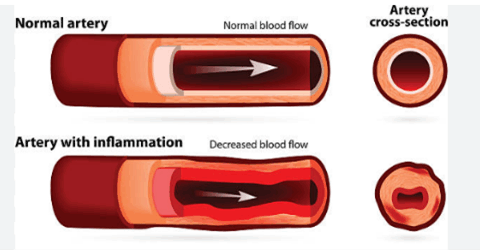
Chronic inflammation occurs when the inflammatory response continues for an extended period, even when there is no apparent injury or infection.
This prolonged inflammation can damage healthy cells, tissues, and organs, potentially leading to various diseases.
Vascular inflammation causes Long COVID symptoms.
 Anti-inflammatory cytokines are immunoregulatory molecules that help control the
proinflammatory cytokine response and regulate the immune system messengers to
modulate inflammation. Examples include IL-4, IL-6, IL-10. While normal immune response involves a balanced release of cytokines, an excessive and uncontrolled
release (cytokine storm) of pro-inflammatory cytokines can cause widespread
inflammation and lead to serious symptoms experienced by Long COVID patients
Which biomarkers link to vascular inflammation?
There are several categories of biomarkers that play a role in vascular inflammation. Two key categories are cytokines and chemokines. Cytokines and chemokines are types of signaling proteins involved in cell communications that regulate various immune responses, including inflammation and cell growth. Cytokines can be categorized into two groups: proinflammatory and anti-inflammatory. Proinflammatory cytokines play a key role in driving inflammation, immune responses, and tissue destruction during infection or trauma.
Proinflammatory cytokines can cause severe effects such as fever, inflammation, and even shock, underscoring the importance of regulating their activity. Examples include IFN-γ, IL-2, IL-8, and TNF-α. Anti-inflammatory cytokines are immunoregulatory molecules that help control the proinflammatory cytokine response and regulate the immune system messengers to modulate inflammation. Examples include IL-4, IL-6, IL-10.
While a normal immune response involves a balanced release of cytokines, an excessive and uncontrolled release (cytokine storm) of pro-inflammatory cytokines can cause widespread inflammation and lead to serious symptoms experienced by Long COVID patients.
Discovering Long COVID’s unique biomarker signature
Researchers hypothesized that the types of biomarkers and their frequency might be different for various stages of the COVID-19 inflammatory response. If true, then for the first time, physicians would be able to definitively diagnose Long COVID from other chronic inflammatory diseases. Furthermore, a unique Long COVID biomarker signature could lead to targeted treatment options that would eliminate vascular inflammation versus just managing symptoms. In their study design, researchers evaluated their hypothesis by comparing patients with mild-moderate, severe, and long COVID to healthy control subjects. Plasma and peripheral blood mononuclear cells (PBMCs) were collected and subjected to analysis for each group.
By utilizing machine learning techniques, the researchers successfully identified unique algorithms that can accurately detect Long COVID and Severe COVID immunotypes, thereby supporting their original hypothesis. Moreover, their clinical research facilitated the development of a quantitative immunologic score, known as the Long Haulers Index, which provides an objective means to stratify patients and evaluate their therapeutic responses.
To download the complete study, click on reference two below.
Where can I order this test?
The research referenced above resulted in the development of IncellKINE™, which is offered through Radiance Diagnostics. For further information regarding ordering IncellKINE™ please visit: defeatlongcovid.com.
References
1. Persistence of SARS CoV-2 S1 Protein in CD16+ Monocytes in Post-Acute Sequelae of COVID-19 (PASC) up to 15 Months Post-Infection PMID: 35082777 PMCID: PMC8784688 DOI: 10.3389/fimmu.2021.746021
2. Immune-Based Prediction of COVID-19 Severity and Chronicity Decoded Using Machine Learning, Front. Immunol., 27 June 202, Sec. Viral Immunology, Volume 12-2021 |
https://doi.org/10.3389/fimmu.2021.700782