

What is causing your Long Covid Symptoms?
What is Long Covid?
Long COVID is a chronic condition that occurs after SARS-CoV-2 infection. The World Health Organization defines Long COVID as starting three months after the initial COVID-19 infection, but other agencies define it as starting at four weeks after the initial infection.1
More than seventeen million people in the US are suffering from Long COVID symptoms.2 Long COVID is characterized by a large number of symptoms that sometimes disappear and then reappear. Commonly reported symptoms are fatigue, memory problems, shortness of breath, and sleep disorder.3,4,5
Several other symptoms, including headaches, mental health issues, initial loss of smell or taste, muscle weakness, fever, and cognitive disfunction may also be present.6
Managing symptoms vs. treating root causes
Diagnosing Long COVID is challenging because its symptoms closely resemble those of other chronic inflammatory diseases, such as Chronic Lyme, Chronic Fatigue Syndrome, and Fibromyalgia.
To address this issue, physicians may ask patients to fill out questionnaires assessing symptom severity to help set treatment priorities.
For example, the Fatigue Severity Scale (FSS) measures fatigue levels, and the Composite Automatic Symptom Scale (COMPASS 31) evaluates aspects of the autonomic nervous system (ANS), including cardiovascular, gastrointestinal, and neurological symptoms.
Severity test scores assist in prioritizing subsequent steps in the diagnostic process. Symptoms such as brain fog, memory impairment, or loss of taste or smell may warrant referral to a neurologist, while dizziness, lightheadedness, and palpitations may indicate the need for evaluation by a cardiologist.
Individuals with Long COVID are frequently referred to multiple specialists, which can require significant time and financial resources. Currently, specialists primarily focus on managing symptoms rather than addressing the underlying causes of Long COVID.
When a blood vessel becomes inflamed, it can:
• Narrow, making it more difficult for blood to get through.
• Close off completely so that blood cannot get through
Vascular inflammation can cause Long COVID symptoms
Vascular inflammation is a condition where the body’s immune system mistakenly attacks blood vessels, causing them to become inflamed.
This inflammation can affect arteries, veins, and capillaries. Arteries are vessels that carry blood from the heart to the body’s organs. Veins are vessels that carry blood back to the heart. Capillaries are tiny blood vessels that connect the small arteries and veins.
When a blood vessel becomes inflamed, it can:
- Narrow, making it more difficult for blood to get through.
- Close off completely so that blood cannot get through.
What causes vascular inflammation?
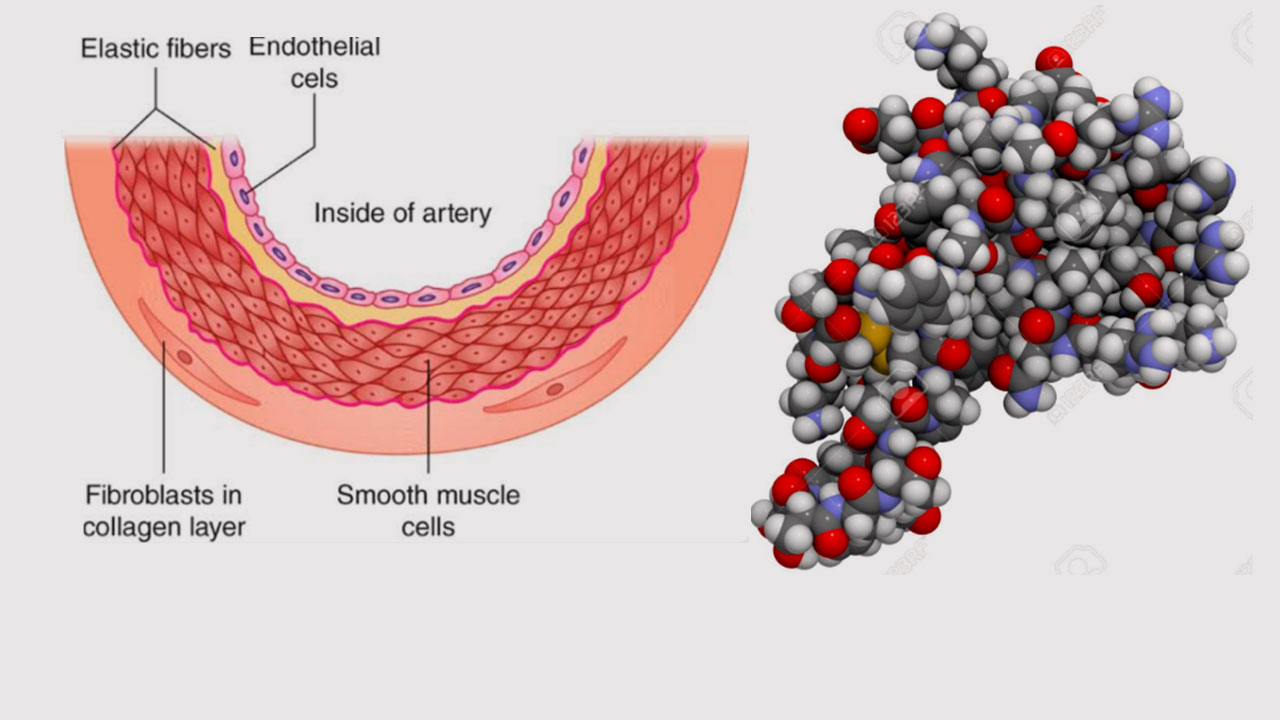
Vascular inflammation occurs when the Endothelium layer of blood vessels becomes inflamed.
The Endothelium consists of a single layer of cells that forms the interlining of blood and lymphatic vessels. The Endothelium plays a key role in both promoting and resolving inflammation, helping to control the bodies’ immune response.
Inflammation is caused by remnants of the SARS-CoV-2 virus. Specifically, the S1 fragment of the spike protein that can remain circulating within blood vessels for up to fifteen months and even longer.7
The S1 fragment, along with other viral particles are absorbed by intermediate and non-classical monocytes (subsets of white blood cells).
White blood cells (WBCs), also known as leukocytes, are a crucial part of the bodies’ immune system, defending against infections and foreign invaders.
These monocytes function as scavengers and travel throughout the body collecting the S1 fragments and viral particles.
Two important signaling proteins play a significant role in attracting these monocytes to the endothelial layer of blood vessels.
First is CCL5 or RANTES, which acts like honey. It attracts monocytes to areas of inflammation. The second is Fractalkine which works like Velcro helping monocytes stick to damage areas within the blood vessels.
When monocytes attach themselves to the endothelial lining of blood vessels, they cause an immune response that is marked by elevated inflammatory markers including IFN-y, IL-6, IL-10, and IL-2, among others.6 These inflammatory markers are called cytokines and chemokines.
As these monocytes travel throughout the body, they irritate the blood vessels causing inflammation that leads to symptoms like fatigue, fog & breathing difficulties crossing into your brain.
Is there a treatment to stop vascular inflammation?
Researchers have published clinical studies that have demonstrated that Maraviroc and Pravastatin, when used in combination block CCL5 (RANTES) and Fractalkine.8
Maraviroc belongs to a class of drugs known as CCR5 antagonists. This drug is currently under clinical investigation, and its safety and effectiveness have not been established by the FDA for Long Covid.
To learn more, click here defeatlongcovid.com.
References
- Altmann DM, Whettlock EM, Liu S, Arachchillage DJ, Boyton RJ (July 2023). “The immunology of long COVID”. Nature Reviews. Immunology. 23 (10): 618–634. doi:1038/s41577-023-00904-7. PMID 37433988. S2CID 259831825.
- As Recommendations for Isolation End, How Common is Long COVID?
- “Long COVID or post-COVID conditions”. Centers for Disease Control and Prevention, US Department of Health, and Human Services. 20 July 2023. Archived from the original on 14 January 2022. Retrieved 23 July 2023
- Chen C, Haupert SR, Zimmermann L, Shi X, Fritsche LG, Mukherjee B (November 2022). “Global Prevalence of Post-Coronavirus Disease 2019 (COVID-19) Condition or Long COVID: A Meta-Analysis and Systematic Review”. The Journal of Infectious Diseases. 226(9): 1593– doi:10.1093/infdis/jiac136. PMC 9047189. PMID 35429399.
- Alkodaymi MS, Omrani OA, Fawzy NA, Shaar BA, Almamlouk R, Riaz M, et al. (May 2022). “Prevalence of post-acute COVID-19 syndrome symptoms at different follow-up periods: a systematic review and meta-analysis”. Clinical Microbiology and Infection. 28(5): 657– doi:10.1016/j.cmi.2022.01.014. PMC 8812092. PMID 35124265.
- Davis HE, McCorkell L, Vogel JM, Topol EJ (March 2023). “Long COVID: major findings, mechanisms and recommendations”. Nature Reviews. Microbiology. 21(3): 133– doi:10.1038/s41579-022-00846-2. PMC 9839201. PMID 36639608.
- Persistence of SARS CoV-2 S1 Protein in CD16+ Monocytes in Post-Acute Sequelae of COVID-19 (PASC) up to 15 Months Post-Infection PMID: 35082777 PMCID: PMC8784688 DOI: 3389/fimmu.2021.746021
- Case series: Maraviroc and pravastatin as a therapeutic option to treat long COVID/Post-acute sequelae of COVID (PASC) Med., 07 February 2023Sec. Infectious Diseases: Pathogenesis and Therapy Volume 10 – 2023 | https://doi.org/10.3389/fmed.2023.1122529